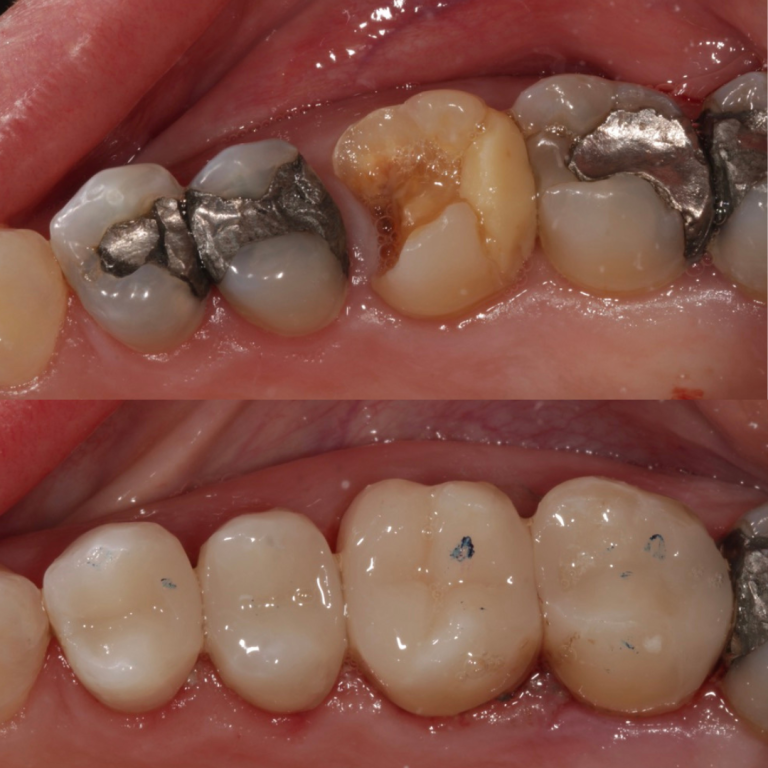
Root Canal
Root Canal Treatment is an amazing treatment helping to maintain the natural teeth. The treatment involves cleaning the damaged nerve tissue from inside a tooth, and filling this area with material which helps prevent bacteria regrowing. The treatment should not generally be painful. Teeth may require root canal following trauma, decay, large fillings or crowns being placed, and abscess. Root canal treatment needs to be done safety and in a way that does not introduce more bacteria into the infected tooth – to ensure this, a rubber dam is placed around the tooth, which securely isolates the tooth being worked on.
Why might you need root canal treatment?
If a tooth is cracked or has a deep interior cavity, bacteria can enter and cause decay of the nerve, tissue, and blood vessels in the canal. If left untreated, the diseased tooth may throb become sensitive to temperature extremes and even cause infection in the jawbone that could lead to an abscess.
Traditionally, this type of core tooth damage meant complete removal of the affected tooth but recent advances in dental technology now means the problem can be treated with a root canal procedure. This cleans, disinfects and refills the interior of the tooth to prevent serious pain and permanent damage to decayed teeth.
How long does root canal treatment take?
A root canal procedure can take a long time to complete and is usually split into two or three sessions. Following anaesthesia to numb the affected tooth, the dentist makes a hole through the crown of the tooth, removes the pulp using tiny delicate instruments and then thoroughly cleans and disinfects the canal. Once clean, the canal is gently shaped so the surgeon can fill it easily with a harmless rubber-based material that helps prevent future infection. At this point, a permanent metal pin may also be attached to the root of the tooth to provide long-term support and then the cavity is temporarily sealed. This marks the end of the first part of the procedure. On your next visit, the temporary sealing is removed and a permanent crown or veneer fitted to permanently seal the tooth.
Are there any complications with root canal treatment?
Although a root canal is a very commonly performed procedure, complications can occur. If the tooth cannot be properly cleaned or if the damage is beyond repair, the dentist may choose to extract it instead. To maximise the chances of having a successful, complication-free procedure, always follow your dentist’s specific pre and post-operative instructions.